
Already know you want to act? Talk to us today – no fees, no obligation, and you’ll have an offer in 24 hours.
You got a quote for lead paint abatement and it made you sit down. Or maybe your insurance company started asking about lead certificates. Or the Lead-Safe Housing Registry landed in your mailbox and you realized your 1940s rental just got more expensive to own.
You are not the only one doing this math right now. Louisville has one of the oldest housing stocks in the South, and the rules around lead paint keep shifting. If you are wondering whether you can even sell a house with lead paint in it, the short answer is yes. But there are things you need to get right.
I have bought and renovated pre-1978 homes all over Louisville. This is what I have learned about the disclosure rules, the real costs, Louisville’s local ordinance, and the options that make sense for different situations. Not legal advice. Just practical guidance from someone who has been inside these houses. Call me at (502) 849-5950 if you want to talk through your specific situation.
Can You Sell a House with Lead Paint in Louisville?
Absolutely. Kentucky law does not prevent you from selling a home with lead paint. You do not have to strip it, encapsulate it, or even test for it before closing. What you do have to do is be honest about what you know.
Federal law (Section 1018 of Title X) requires every seller of a pre-1978 home to:
- Disclose any known lead-based paint or hazards in the property
- Provide the buyer with an EPA pamphlet (“Protect Your Family From Lead in Your Home”)
- Give the buyer 10 days to conduct a lead inspection (the buyer can waive this)
- Include specific lead paint language in the sales contract
Every pre-1978 sale in America follows these rules, no matter what your state or city says on top of them. Get it wrong and you are looking at up to $19,507 per violation in civil fines, plus potential treble damages if a buyer sues.
Here is the part that trips people up: you must disclose what you know, but nobody is making you go looking. Never had the home tested? Say so on the form. Got test results sitting in a drawer? Those have to go to the buyer. Simple as that.
Important: This article provides general information about selling a home with lead paint. It is not legal advice. For questions about your specific situation, consult a Kentucky real estate attorney. Federal and local regulations can change. All regulatory information in this article reflects the law as of March 2026.
Louisville’s Lead-Safe Housing Registry: What Changed and What Didn’t
This one has been a rollercoaster. If you own rental property in Louisville, you have probably heard three different versions of what the registry requires. Here is what actually happened.
The Original Ordinance (December 2022)
Louisville Metro Council passed the Lead-Safe Housing Registry unanimously in December 2022. It went active on December 1, 2024. The original version had real teeth:
- All pre-1978 rental properties had to register with the city
- Proactive lead paint testing for registered properties
- Random inspections by the health department
- Tenant retaliation protections
- Registration fees
The Weakened Version (February 2025)
Frankfort pushed back hard. HB 173 threatened to preempt the whole thing statewide. So Metro Council voted 17-8 on February 27, 2025, to gut the enforcement provisions. Mayor Greenberg would not sign it, but he let it become law without his signature.
Gone:
- Proactive testing requirements
- Random inspections
- Tenant retaliation protections
- Registration fees
Still standing:
- The registry itself
- If a child tests positive for elevated blood lead levels, the property gets a mandatory assessment and a 90-day remediation deadline
- Your liability as a property owner (unchanged)
- Phased compliance deadlines
Phase Deadlines (Still Active)
| Home Built | Compliance Deadline |
|---|---|
| Pre-1940 | November 30, 2025 (passed) |
| 1940-1965 | November 30, 2026 |
| 1966-1978 | November 30, 2027 |
Own a rental built between 1940 and 1965? Your deadline is less than eight months out.
What This Means for Sellers
The weakened ordinance took away the proactive testing burden. Good news if you are a landlord. But the core risk did not go anywhere: a child with elevated lead levels in your property still triggers the clock. And federal disclosure rules apply to every sale regardless of what Louisville does or does not enforce locally.
If you are a landlord running the numbers on whether to keep holding or sell, the ordinance is one more line item in the equation. If you are a homeowner selling your own place, it is mostly background noise. Either way, the federal disclosure is the piece that matters at the closing table.
The Real Costs: Testing, Abatement, and What the Numbers Look Like
This is where the decision gets real. Whether you fix the lead paint or sell as-is comes down to the math on your specific property.
Lead Paint Testing
A certified inspection in Louisville runs $300 to $800 per unit. The price depends on the size of the home and the testing method. XRF gun testing is faster and covers more surfaces in one visit. Lab analysis (paint chips sent to a lab) costs less per sample, but you are paying for each chip individually. Most inspectors recommend XRF for the speed.
Lead Paint Abatement
Full abatement runs $5,000 to $20,000 per unit in Louisville. What drives the cost:
- Square footage and number of rooms
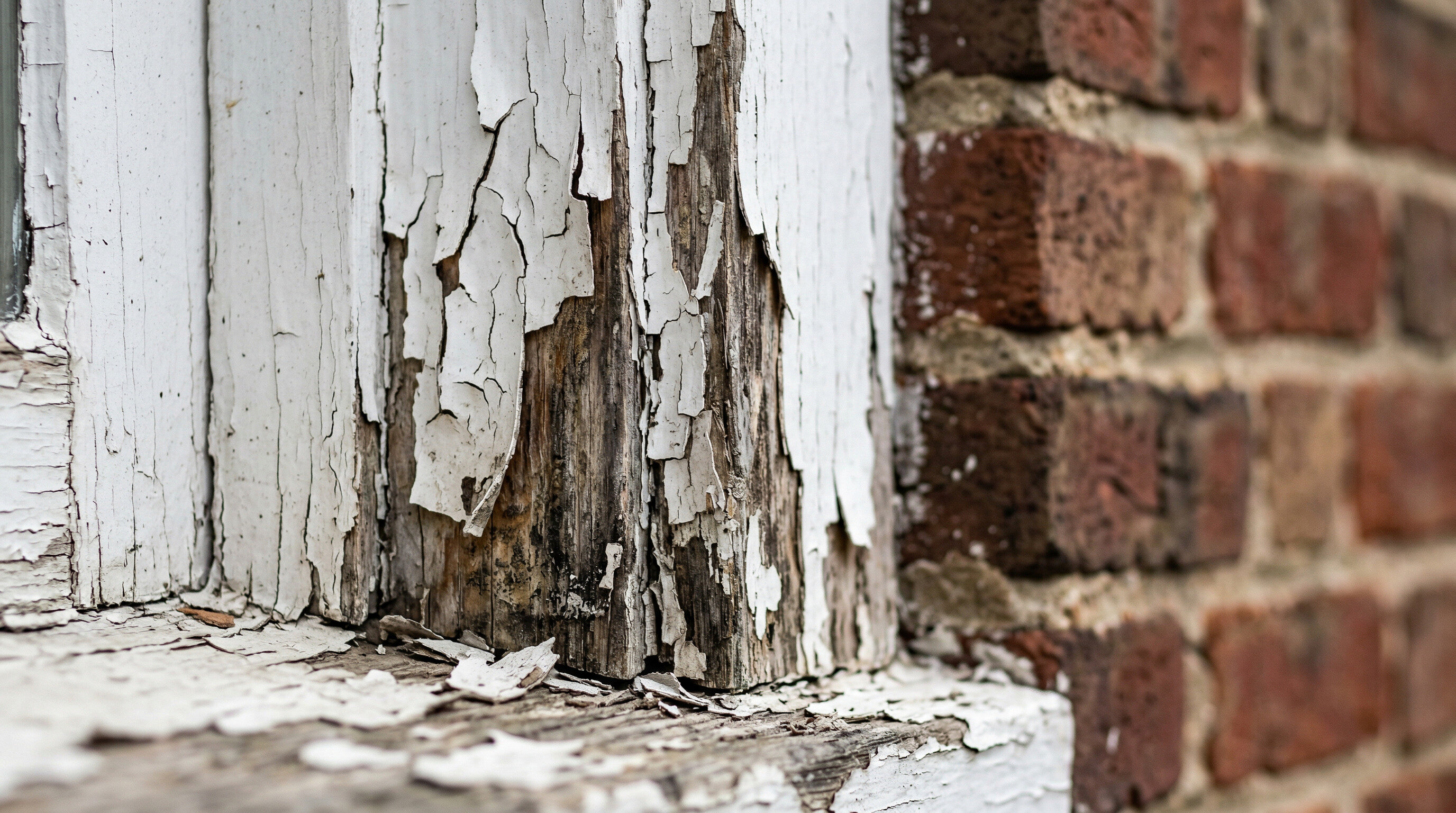
- How bad the paint is (peeling and chipping costs more because it is a higher hazard class)
- Which surfaces need work (windows and doors are the most expensive because friction breaks down the paint)
- Whether anyone is living there (occupied homes mean relocation costs on top)
Three rental units? Do the multiplication:
$15,000-$60,000
Potential abatement cost for a 3-unit portfolio
Encapsulation: The Cheaper Alternative?
Encapsulation coats lead paint with a specialized sealant. It runs $1,500 to $5,000 per unit, which sounds a lot better than full abatement. But there is a catch. Encapsulation does not hold up on friction surfaces: windows, doors, stair treads. Those are exactly the spots where lead paint grinds into dust every time someone opens a window. A lot of inspectors will not sign off on encapsulation alone for that reason.
The Grant Program
Louisville’s Lead-Safe Louisville program has helped some owners cover abatement costs. The reality check: as of early 2026, the program has cleared roughly 370 homes total and is not taking new applications. If your plan hinges on grant money, you might be waiting longer than your timeline allows.
The Hidden Cost: Your Buyer Pool
This is the cost nobody puts on the abatement quote. FHA and VA loans will not close on a home with deteriorating lead paint. The appraiser flags peeling, chipping, or chalking paint on any pre-1978 home, and the lender shuts it down until the seller fixes it.
In Louisville, FHA and VA buyers make up a big chunk of the market. Cut them out and your buyer pool shrinks by 40% or more. Fewer offers. Longer time sitting on the market. Lower sale price. That is a real cost even if it never shows up on a contractor’s invoice.
Your Four Options for Selling a House with Lead Paint in Louisville
Four realistic paths. Each one trades something for something else. The right choice depends on your numbers, your timeline, and how much of the process you want to deal with personally.
Option 1: Abate First, Then Sell on the MLS
Best for: Homeowners with one property, enough cash or credit to cover abatement, and patience for a retail buyer.
- Pay for testing and full abatement ($5,300-$20,800 per unit)
- Get a lead-safe certificate
- List on the MLS with a clean disclosure
- Full buyer pool available (including FHA/VA)
- Expect 60-120 days from start of abatement to closing
The upside: Highest possible sale price. Your buyer pool has no restrictions.
The downside: You are writing a check for $5,000 to $20,000+ before you see a dime back, and you are paying the mortgage, insurance, taxes, and utilities the whole time. If you have multiple units, that math gets painful fast.
Option 2: Encapsulate and Disclose
Best for: Homeowners looking to improve the property without paying for full abatement.
- Encapsulate where possible ($1,500-$5,000 per unit)
- Abate friction surfaces that cannot be encapsulated
- Disclose the lead paint history and the encapsulation work
- FHA/VA buyers may still have issues if any deterioration is visible
The upside: Costs less than tearing everything out.
The downside: Half-measure. Encapsulation on friction surfaces will break down over time. Buyers and inspectors know this. You may still lose FHA/VA buyers, which defeats a big part of the purpose.
Option 3: Disclose and Sell Retail (No Remediation)
Best for: Homeowners in neighborhoods with strong demand where cash and conventional buyers are common.
- Get a lead paint inspection (optional but recommended)
- Complete the federal disclosure form honestly
- List on the MLS at a price that reflects the condition
- Buyer pool limited to cash and conventional loan buyers
The upside: Zero remediation costs upfront.
The downside: Smaller buyer pool. Longer days on market. Price reduction almost certain. Smart buyers will negotiate the abatement cost right out of your sale price, so you end up paying for it anyway, just indirectly.
Option 4: Sell As-Is to a Cash Buyer
Best for: Landlords facing compliance costs across multiple units, homeowners on a tight timeline, inherited property owners who never asked to own a pre-1978 home in the first place.
- No testing required (cash buyers do their own due diligence)
- No abatement or remediation before closing
- Federal disclosure still applies (disclose what you know)
- Close in as little as 2-3 weeks
- No FHA/VA obstacles because there is no lender in the picture
The upside: No upfront cost. Fast close. Certainty that the deal will actually happen.
The downside: Cash offers come in below full retail. You are trading top dollar for speed, certainty, and walking away clean. For some people that trade makes sense. For others it does not.
How We Handle Lead Paint Properties at We Buy 502
I want to be direct about this part because I think it matters when you are deciding who to sell to.
I have personally bought and renovated multiple pre-1978 homes in Louisville. When you work on houses built in the 1900s and 1920s, lead paint is not some surprise that shows up on an inspection report. You expect it walking through the front door.
Our renovation of a 1920 home on MLK Boulevard was a full gut job. We dug out the foundation, replaced the framing, tore the whole thing down to studs and rebuilt from there. That project required certified lead-safe renovation practices from day one through the final coat of paint.
We also bought a property on Camp Street built around 1900 with asbestos siding and serious structural problems. Both of these were in neighborhoods where lead paint is the norm: Shelby Park, Portland, Shawnee, Beechmont. Not the exception.
What does that mean for you?
We are not going to be surprised by what is in your walls. When we make an offer on a pre-1978 home, lead paint is already baked into our numbers. We will not come back after inspection wanting to renegotiate because we “found” lead paint in a house built in 1942. We already knew.
The remediation is on us. Our crews follow EPA RRP (Renovation, Repair, and Painting) rules. We use certified contractors. At closing, the lead paint stops being your problem.
We know Louisville. We know which ZIP codes have the densest concentration of pre-1978 homes (40203, 40210, 40211, 40212, 40215). We know the neighborhoods because we buy in them.
If you are a landlord staring at $15,000 to $60,000 in abatement across a portfolio, or you inherited a pre-1978 property and have no idea where to start, call me at (502) 849-5950. Happy to walk through the numbers with you.
Frequently Asked Questions About Selling a House with Lead Paint in Kentucky
Do I have to test my house for lead paint before selling in Kentucky?
No, you do not. Federal law and Kentucky law both stop at disclosure, not testing. If you have never had the home tested, you disclose that you have no knowledge of lead-based paint. If you do have test results or firsthand knowledge, those go to the buyer. The law does not force you to go looking for problems.
What happens if I do not disclose lead paint when selling?
Federal penalties under Section 1018 can hit $19,507 per violation. Buyers can also sue privately for treble (triple) damages. The current administration has pulled back on enforcement, but private lawsuit risk has not changed at all. Honest disclosure is cheap insurance.
Can I sell a house with lead paint to an FHA or VA buyer?
Depends on the condition of the paint. FHA and VA appraisers flag any deteriorating paint (peeling, chipping, flaking, chalking) on pre-1978 homes and the lender will not close until it is fixed. If every painted surface is in solid condition, FHA/VA financing can move forward. But in practice, most pre-1978 Louisville homes have deterioration somewhere, usually windows and exterior trim.
Does Louisville’s Lead-Safe Housing Registry affect home sales?
Mostly affects rentals, not owner-occupied homes being sold. But if you are selling a rental property, the registry status is something your buyer will ask about. The February 2025 revision stripped out proactive testing requirements, but the registry is still active. And a child with elevated blood lead levels still triggers mandatory assessment and a 90-day remediation deadline on the property.
How much does lead paint abatement cost in Louisville?
Typically $5,000 to $20,000 per unit for full abatement, depending on square footage, how deteriorated the paint is, and which surfaces are involved. Windows and doors cost the most because the friction from opening and closing grinds the paint into dust. Testing alone runs $300 to $800 per unit.
What is the difference between lead paint abatement and encapsulation?
Abatement permanently removes or contains lead paint. Think chemical stripping, replacing entire window components, or building an enclosure around contaminated surfaces. Encapsulation is a coating ($1,500 to $5,000 per unit) that seals the lead paint in place. Encapsulation is cheaper upfront but breaks down on friction surfaces. A window you open every day will grind right through the sealant.
Can I sell my rental property to avoid lead paint compliance costs?
You can. Plenty of Louisville landlords are doing exactly that calculation right now: cost of testing, abatement, and ongoing compliance across multiple units versus the value of continuing to hold. There is no legal requirement to abate before you sell. You complete the federal disclosure, and the remediation decision transfers to whoever buys it.
What if a tenant’s child tests positive for lead poisoning in my property?
Under the current Louisville ordinance, that triggers a mandatory assessment of the property and a 90-day deadline to remediate. This survived the February 2025 revision. The property owner pays for it. This is one of the reasons some landlords decide to sell before a trigger event happens rather than risk the cost and liability after one does.
Does Kentucky have additional lead paint laws beyond the federal requirements?
For home sales, Kentucky does not add disclosure requirements beyond what the federal government already requires. Louisville’s Lead-Safe Housing Registry adds requirements for rental properties specifically. One detail worth knowing: Louisville uses a 0.7 mg/cm2 threshold for XRF testing. The EPA standard is 1.0 mg/cm2. That means a property can pass the federal standard and still fail Louisville’s. If you are getting testing done, make sure your inspector knows which threshold applies.
Will a cash buyer give me a fair price for a house with lead paint?
Cash offers on pre-1978 homes reflect the cost of remediation, so they will come in below what a fully renovated home would bring on the open market. That is the trade-off: you close in 2-3 weeks instead of months, there are no financing contingencies to blow the deal up, and you spend nothing out of pocket. Whether that trade-off works depends on your math. A landlord facing $20,000+ in abatement, carrying costs on a vacant unit, and a compliance deadline breathing down their neck may actually walk away with more in hand after a cash sale than they would after months of carrying costs and remediation bills. Call (502) 849-5950 and I will run the numbers with you.
Want to know what your Louisville property is worth as-is? Get a no-obligation cash offer.
